Remove or prune a tree in Apex: how do you decide?
Deciding whether to remove or prune a tree in Apex means weighing its condition, the problem you want solved and what useful pruning can realistically achieve.
Deciding whether to remove or prune a tree in Apex starts with the tree's condition and the problem you need solved. Trees of Carolina looks at whether the right pruning can get you there and still leave a healthy tree, or whether taking it down makes more sense. A tree's size, shade or looks alone don't settle it.
Our tree maintenance service covers pruning and care for the trees you keep, and our tree removal service covers the ones that need to come down. Choosing between them means looking at what each would do at your address. The best place to start is telling us plainly what's bothering you.
What problem are you trying to solve?
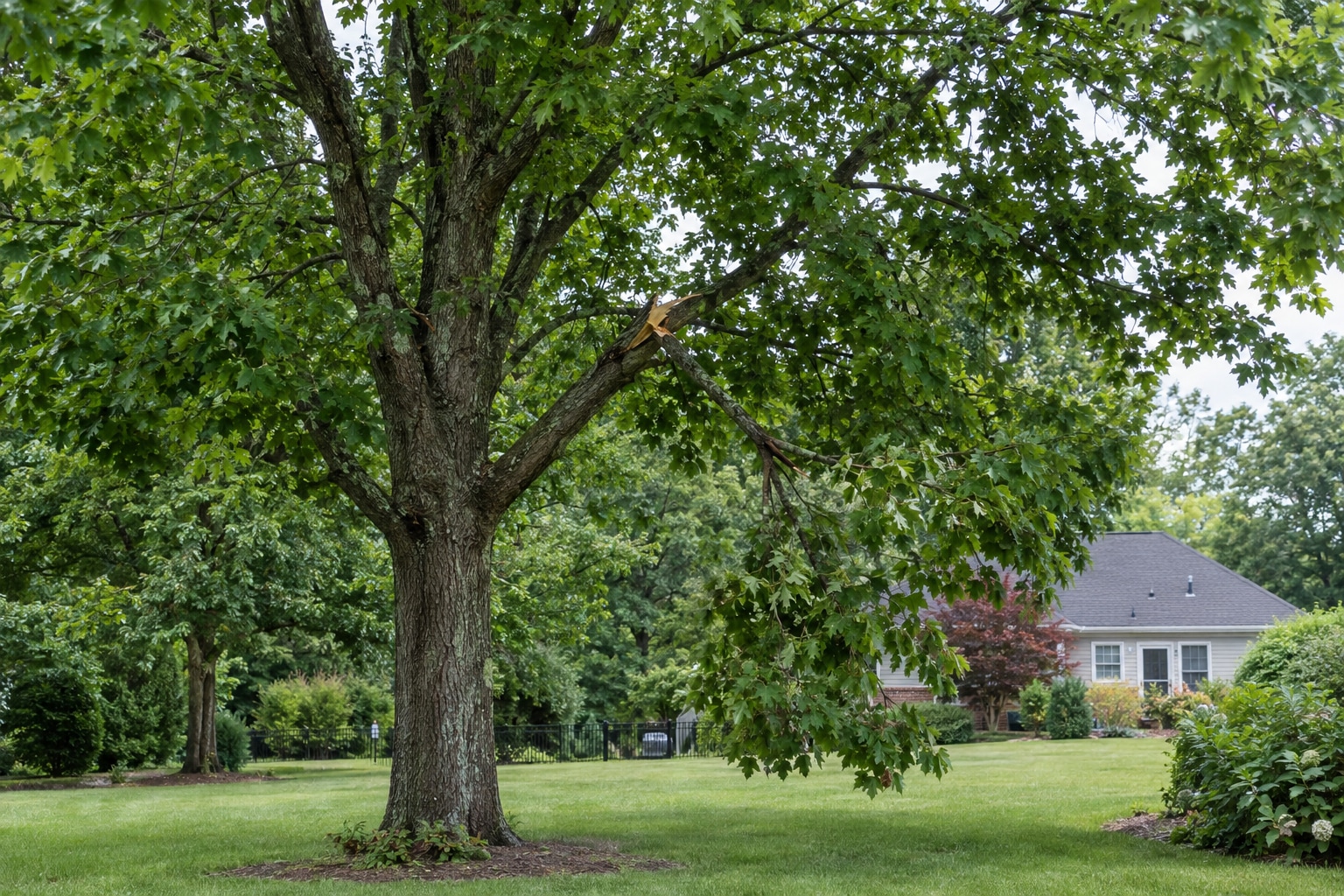
A branch touching the roof is different from a trunk growing against the house. A low limb over a path is different from serious decay at the base. Either one might lead you to ask about removal, but they don't call for the same answer.
Start with what you need: clearance, a worry checked out, more room for something already in the yard or a decision about a tree that's going downhill. Tell us which part of the yard is affected and how you use it. That gives our visit a clear purpose.
Also tell us what you like about the tree. Shade, privacy, how it looks through the seasons and how it fits with neighboring trees all count when deciding whether to keep it. You don't have to choose between ignoring a problem and taking the tree down before anyone understands what's wrong.
When can pruning solve the problem?
Pruning can take care of specific dead, damaged or problem branches. It can give you clearance or help shape a young tree. Which cuts make sense depends on the tree's condition and whether good branches will be left afterward.
A good pruning recommendation explains what's coming off and why. It should also say what the work won't fix. Taking off a branch over the roof, for example, doesn't tell you the roots, trunk and other branches are sound.
How much of the tree comes off matters. If getting what you want means removing a big share of a stressed tree's healthy crown, that can defeat the point of keeping it. Sometimes doing less, or doing it in stages, is worth a try; sometimes what you're asking for just isn't compatible with keeping a healthy tree.
When does removal become the better option?
Removal may be the right call when the tree's condition or structure makes keeping it a poor choice for where it stands. It may also make sense when the tree and its spot clash in a way sensible pruning can't fix. Either way, we should be able to tell you what we found and why it leads there.
That doesn't mean every flaw calls for removal. A cavity, an awkward shape or one damaged branch has to be seen in context. The rest of the tree's structure, its health and what's around it all go into the decision.
If we recommend removal, ask us why in plain language. Is it mainly the tree's structure, its decline, a conflict that can't be avoided or a mix? Knowing the reason helps you weigh the advice and see why pruning would or wouldn't change it.
Should you remove or prune a tree in Apex because of its height?
Height is only part of it. A tall, sound tree with plenty of room is a different question from a smaller tree with a serious flaw over a spot you use every day. Judging either one takes more than looking at how high it goes.
A lot of people ask us to cut a tree down to a permanently smaller height. Pruning doesn't change how big that species grows. Heavy topping can leave large wounds and new growth that turns into more work down the road.
Proper crown reduction can work for some trees and goals, but it has limits. Ask which branches would be left to carry the reduction and what upkeep it would need later. If you'd need severe cutting again and again to get what you want, it's worth asking whether that tree still belongs there.
How does the tree's health affect the choice?
A tree grows on what its leaves produce, so pruning decisions have to account for how vigorous or stressed it is. Thin leaves, unusual dieback or other changes can point to questions about roots, soil, injury or disease. They don't tell you the cause on their own.
Cutting off the branches that look bad doesn't necessarily fix what's causing them. If roots were disturbed, we need to know that history, even if the first thing you noticed was a thinning crown. We may need to look more closely before choosing a treatment.
Derek McConnachie, owner of Trees of Carolina, is an ISA Certified Arborist with over 30 years in tree care. We'll talk through the tree's condition and what each option would really get you. The goal is to give you a well-reasoned next step, not a promise that care can save every tree.
What changes if the tree is close to a house?
Being close to the house affects both whether to keep the tree and how any work gets done. A branch over a part of the yard people use may need different thinking from one over empty ground. How you use the space matters as much as the distance in a photo.
Buildings nearby also affect how pruning or removal can be done. Access, room to land the wood and surrounding trees may limit the options. A tree isn't automatically impossible to keep, or easy to take down, just because it's close to a roof.
When we visit, show us where people spend time and the problems you've noticed. Tell us about any plans for a patio, an addition or a new way in. What you plan to do with the yard can change the decision, especially if that work could affect the tree's roots or growing space.
How should you compare the two proposals?
Compare what each option is meant to do and where it falls short. For pruning, ask which branches would be cut, what stays and whether more work will be needed later. For removal, ask how it would be done and what happens to the stump and the wood.
How the tree looks right after the work isn't the only thing to weigh. A tree might need reasonable ongoing care, or the clash with its spot might still be there after a lot of work. Ask whether the plan actually solves the problem that made you call.
You can also ask what we don't know yet. Some conditions need a closer look, and no one can guarantee what a living tree will do. Knowing what's uncertain is part of making a good decision, not a reason to accept advice nobody has explained.
Questions we hear
Is pruning always preferable to removal?
No, pruning makes sense when it meets a reasonable goal and leaves a healthy tree. Serious problems with the tree's condition, or a clash with its spot that won't go away, may make removal the better choice.
Does a tree need removal because it drops leaves or twigs?
Normal shedding on its own isn't a reason to remove a tree. Tell us what's changed and whether broken limbs or other warning signs are coming down too.
Can I send photos before arranging a visit?
Yes, photos taken from a safe spot help show us the tree and the problem. We still need to see its structure, roots and surroundings in person.
If you're weighing pruning against removal on your Apex property, contact Trees of Carolina with the tree's location and what you'd like to end up with.