
Protecting trees during property work in Cary: what comes first?
Protecting trees during property work in Cary starts before digging or deliveries. Learn how root zones, traffic, grade changes and a clear plan affect the trees you keep.
Protecting trees during property work in Cary starts before any equipment, digging or stacked materials reach the roots. Trees of Carolina helps homeowners look at the condition of the trees they're keeping and how the planned work could affect them. Not touching the trunk is only part of protecting a tree; the soil and roots need looking after too.
Our tree care and maintenance service covers tree health as well as pruning. If you're planning a patio, driveway or other project near a tree you want to keep, bring us the layout early. It's much easier to move an access route on paper than after trucks have packed down the soil.
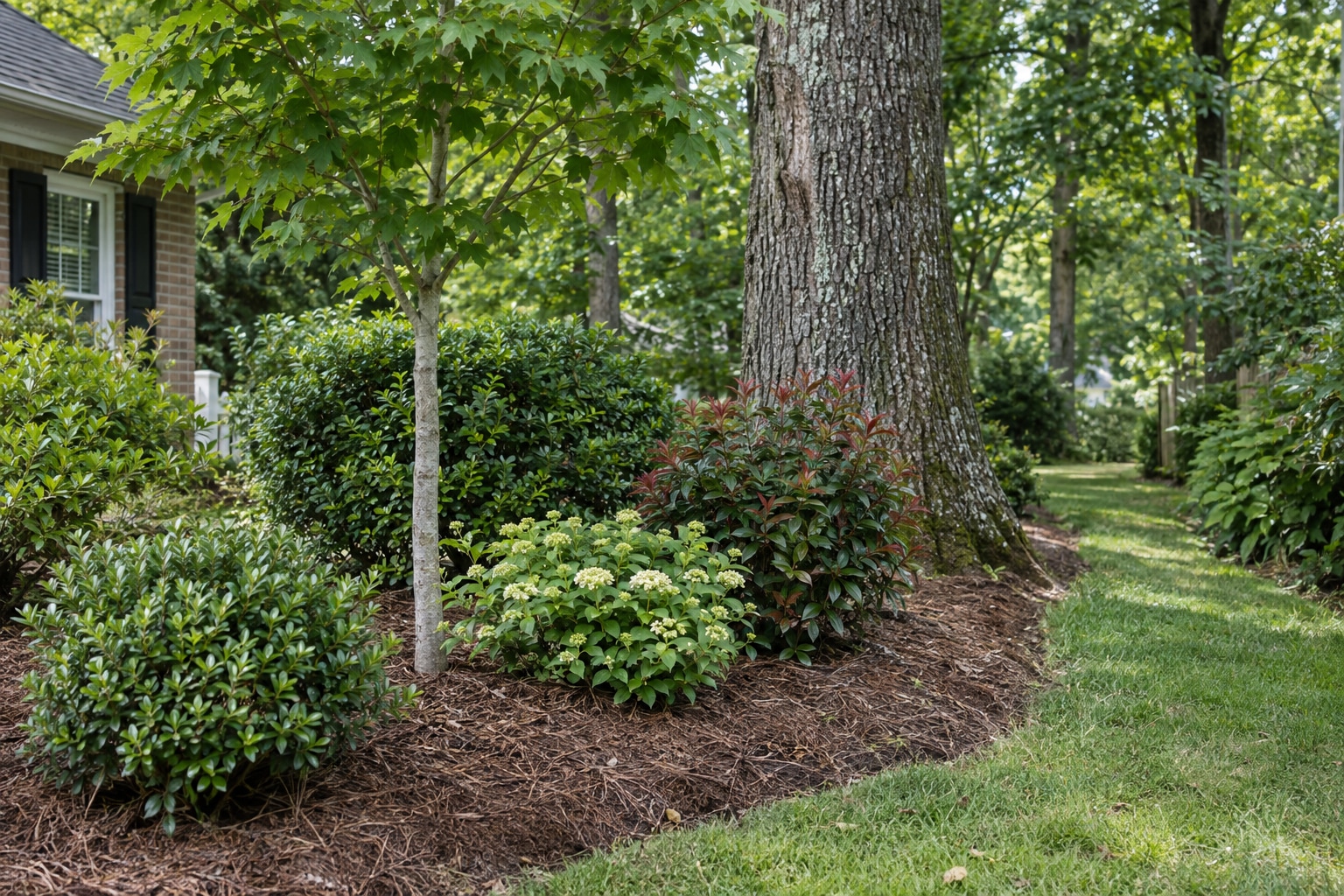
Why protecting trees in Cary starts with the roots
Roots hold the tree up and take in water and nutrients from the soil. Many of the roots that do that work sit fairly shallow, and a tree's roots can spread well past the edge of the canopy. The ground right around the trunk isn't the only ground that matters.
That trips up a lot of projects: a work area looks clear because there are no branches overhead. Digging, storing materials or driving over it again and again can still damage the roots of a tree you're keeping. And different trees and yards handle disturbance differently.
A good protection plan takes into account the tree's size, condition, species and growing space along with the work you have planned. No simple circle on the ground fits every yard. The goal is to mark off an area that really matters and make sure everyone on the job knows where it is.
What information should you gather before a visit?
Bring a drawing or plan showing what will change. Include the work itself and the less obvious ways the yard will get used: equipment routes, deliveries, storage, debris piles and where workers plan to park. The outline of a patio doesn't show everything a project can touch.
Tell us which trees you most want to keep and why. Shade over the house, privacy from a neighbor or just what a tree means to you can help us sort out priorities. Also point out any tree that's changed recently or already looks stressed.
Share the schedule while it can still change. Some decisions need the contractor doing the project, especially if digging or access has to move. Our advice is most useful when it can still shape those choices.
How does repeated traffic affect the soil?
Trucks and equipment can compact the soil, squeezing out the spaces that hold air and water. That can keep roots from working even when nobody sees a cut root or broken branch. Wet or soft ground is especially easy to damage.
One handy route can turn into the main haul path for a whole project. Delivery trucks, loaders and parked cars may all use it. Asking everyone to “be careful” works less well than marking where traffic can go and where it has to stay out.
Where traffic near trees can't be avoided, talk with us about protecting the ground. What works depends on the weight, the soil and the layout. Mats or other measures can help in the right situation, but they don't make endless traffic harmless or take the place of a good route plan.
Why are trenching and excavation important?
A narrow trench can cut through roots across much more of the root system than its width suggests. Where the trench runs in relation to the tree matters, and so do how many roots get cut and how big they are. Cutting large roots can make a tree less stable as well as less healthy.
Don't assume whoever is laying a utility line or pouring a footing knows which roots can be cut. Talk to us about the tree before the digging starts, while there's still time to consider other options. Any change in the route or the digging method has to fit your yard and the work being done.
If roots turn up unexpectedly, stop work in that spot and get advice before cutting them. Leaving the decision until a machine is waiting at the trench invites a rushed answer. Take a photo from a safe spot and tell us exactly what's already happened.
Can changing the grade hurt a retained tree?
Piling soil over roots or scraping it away from them changes the conditions the tree grows in. Fill can cut off air and water, while digging can remove roots or leave them exposed. The flare at the base of the trunk needs special care, because burying it puts the tree in conditions it didn't grow up with.
Drainage changes matter even if the ground right by the trunk stays the same. Water sent from a roof, driveway or new paving can change how long an area stays wet. A tree that did fine with the old drainage may struggle with the new.
Bring any planned grade or drainage changes into the conversation instead of treating them as separate landscaping details. Ask your contractor to show where water will go and where soil levels will change. That lets us tie the tree care to the actual project.
What should be excluded from a protection area?
A protected root area shouldn't turn into a handy storage corner. Soil piles, pavers, pallets, machinery and construction debris can crush or contaminate the ground. Materials may only sit there for a while, but the damage to the soil can last.
Keep concrete washout, fuel and any other liquids well away from where trees are growing. Protect the bark wherever materials or equipment could hit the trunk. Fencing should go up as part of the plan and stay up, not come down whenever it gets in the way.
Everyone working on the property needs to know the same boundaries. Share the plan with your main contractor and agree on where deliveries will go. Making it clear who keeps the routes and protected areas in place stops a good plan from falling apart on a busy day.
What happens after the project?
Don't judge the tree just by whether it still has leaves when the machines leave. Some effects of root damage or changed soil take time to show. Keep the project dates and a note of the areas affected, so later symptoms can be understood.
Don't rush to add fertilizer, prune heavily or pile mulch against the trunk to fix things. The next step should respond to what we actually find. We may talk about watering or other care, but the right approach depends on the tree and soil.
Derek McConnachie, owner of Trees of Carolina, has over 30 years in tree care and is an ISA Certified Arborist. We can go over your trees' condition and what to protect first before work begins, then come back and look if a tree changes afterward. The earlier we hear about the project, the more we can help.
Questions we hear
Is keeping equipment away from the trunk enough?
No, roots and the soil they grow in reach well beyond the trunk. Traffic, digging and storage can harm a tree you're keeping even if the bark is never touched.
Can I cut roots that are outside the canopy?
The roots don't stop where the canopy ends. Whether a root can be cut depends on the whole tree, its condition and the work you're planning.
Will fertilizer fix construction damage?
Fertilizer doesn't reconnect cut roots or undo every change to the soil. Any treatment should follow a look at the actual problem, not be the automatic answer.
Before property work begins near your Cary trees, contact Trees of Carolina with your plans, the routes equipment will take and the trees you want to keep.