
Leaning or damaged tree in Raleigh: what needs an assessment?
A leaning or damaged tree in Raleigh needs context, including recent movement, roots, cracks and what is nearby. Learn what to report and how an assessment guides the next step.
A leaning or damaged tree in Raleigh needs someone to look at what changed, where the damage is and what could be hit if part of it fails. Trees of Carolina looks at trees for removal and care, including when a new lean, a broken limb or a damaged trunk has you worried. A photo or the angle of the trunk alone can't tell you whether a tree should stay or go.
With our tree removal service, we talk through the tree and the space around it before choosing how to take it down. Sometimes what we find calls for a different kind of care, or for a closer look. The first job is understanding the problem, not treating every lean the same way.
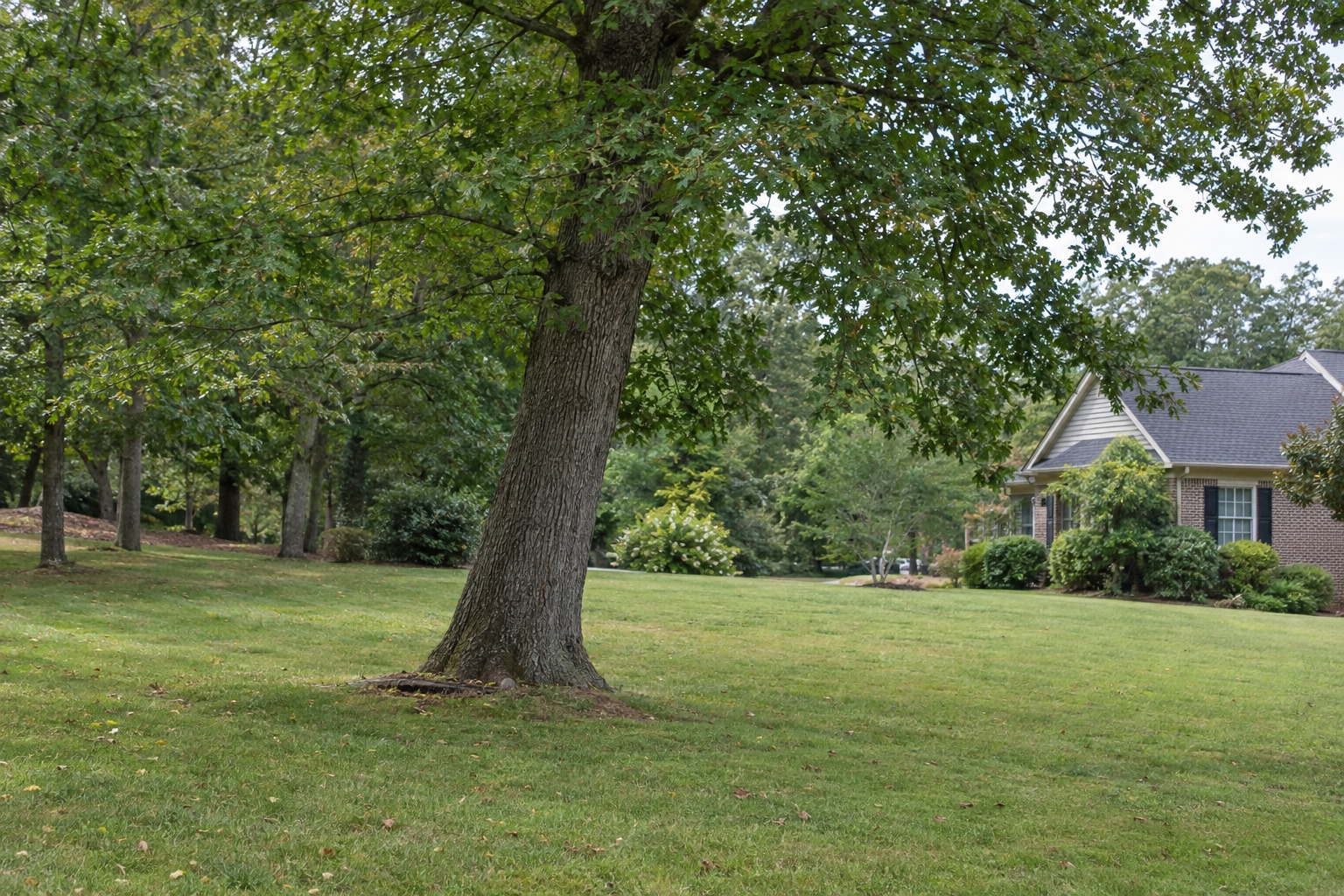
Has the lean changed, or has it always been there?
Trees often grow with a lean as they reach for light or adjust to what's around them. A lean that's been there for years and a tree that visibly shifted yesterday are two very different things. Knowing the history tells us what to look for.
Check what you already have, such as old yard photos that show where the trunk used to be. Tell us whether the tree looked different after a storm, nearby digging or a change in the soil. Don't push on the trunk, pull on branches or try to test how stable it is yourself.
A lean you're used to isn't proof the tree is sound, either. Decay, root damage or a new crack can change a tree that has looked the same for years. The history is one piece; we put it together with the tree's condition now and what's under and around it.
What we look at in a leaning tree in Raleigh
The roots, trunk, main branch joints and crown all tell part of the story. Soil lifting near the base, a fresh crack or a split where branches join may need a close look. So can a large broken branch still hung up in the canopy.
What's nearby matters too. A flaw over a patio you use is a bigger concern than the same flaw over an empty corner of the yard. We look at both the tree and the people or property it could reach; size alone doesn't tell you that.
If you see recent movement, a hanging limb or anything else that looks dangerous right now, keep people and pets away from the area. Don't go under the tree to get close-up photos. If a tree is touching or threatening power lines, stay clear and call the utility; work near live lines needs the utility involved.
What can trunk cracks and cavities tell you?
A crack can change how the tree carries its weight, but how much it matters depends on where it is, how far it runs and the wood around it. A shallow crack on the surface isn't the same as a deep split. From a photo taken at a distance, it may be impossible to tell which you have.
A cavity or hollow also needs context. The opening you can see doesn't show how much solid wood is left, and a leafy crown doesn't prove the trunk is strong enough. At the same time, finding a cavity doesn't by itself mean the tree has to go.
When we visit, point out any changes you've noticed and when you first saw them. Mention branches that have broken before, wounds or work done around the trunk. If important parts of the tree can't be seen, it may need a closer look, and we'll tell you that rather than guess.
Why should we ask about digging and nearby work?
Tree roots spread well beyond the ground right beside the trunk. Trenching, grading, vehicle traffic and drainage changes can harm a tree without leaving an obvious wound in the bark. The damage may show up well after the work, not on the day it happened.
Tell us about utility work, a new patio, driveway changes or cars parked under the canopy. Tell us where digging happened and whether the grade or drainage changed. Plans or photos from that work can help us see what needs attention.
Don't dig away soil or uncover roots yourself to help us out. Digging carelessly around roots can damage the very roots we need to look at. Tell us the history first, and we'll decide the next step based on the actual question.
Does a damaged branch mean the whole tree must go?
Not necessarily. Some branch problems can be fixed with the right pruning, while others point to a bigger structural problem. The condition of what's left where the branch broke, and whether the tree can still hold up its crown, are part of the decision.
If we recommend removal, we should be able to explain why keeping the tree doesn't make sense in your situation. If we suggest pruning, ask what it fixes and what it leaves unresolved. Taking off one branch doesn't make a living tree worry-free forever.
Trees of Carolina's owner, Derek McConnachie, is an ISA Certified Arborist. We'll talk through the real choices for your tree, your property and how you use the space. You should come away understanding the reason for our advice, not just a yes or no.
What can you safely record before a visit?
Write down when you first noticed the problem, whether it followed something specific like a storm, and whether anything has changed since. Note where people usually walk, park or spend time near the tree. That explains the concern without you having to go near it.
If you can take pictures from a safe spot, include a wide shot of the whole tree and what's around it. An older photo helps if the question is whether the lean has changed. Don't use a ladder or stand under damaged branches to get a close-up.
Also tell us if the way in has changed or a fallen piece is blocking an area. Photos help us plan the visit and spot obvious access problems. They can't replace seeing the tree, its base and what it could fall on in person.
What should happen after the assessment?
Ask what we recommend, why, and what we're still unsure about. A good conversation separates what we found from predictions nobody can make with certainty. It should also make clear whether more checks or keeping an eye on the tree are part of the plan.
If the tree stays, ask what changes should prompt another call and whether a follow-up visit makes sense. If removal is recommended, ask how access and nearby buildings affect the way we'd do it. Either way, you should leave with a clear next step.
Don't diagnose the tree from a symptom checklist. A leaning trunk, a bare branch, a crack or an exposed root can mean different things in different yards. Seeing the tree in person lets us put those details together.
Questions we hear
Does every leaning tree need removal?
No, some trees have grown with a lean for years. A new change, root damage or another problem can change that, so we look at the tree and its surroundings together.
Can a green canopy hide structural problems?
Yes, leaves show that parts of the tree are working but don't show everything about its structure. We still check the roots, trunk wood and branch joints when we look at it.
Should I wait until another branch falls?
A branch that has already failed, or any visible change, is a reason to get the tree looked at rather than trust how it's held up in the past. Keep clear of damaged areas while you arrange the next step.
To talk about a leaning or damaged tree on your Raleigh property, contact Trees of Carolina with where it is, what changed and any photos you can take safely.