
Crane-assisted tree removal in Cary: will the truck fit your property?
Crane-assisted tree removal in Cary depends on reach, setup space and tree condition. Learn what a residential boom truck can do and what an on-site visit must establish.
A boom truck can handle crane-assisted tree removal in Cary when it can reach the tree and there's a good place on the property to set up. At Trees of Carolina, we look at the way in, the ground and the lift plan together before deciding whether our 17-ton Terex boom truck is right for the job. The crane's size on paper can't tell you whether a particular tree can come out from a particular driveway.
Our crane-assisted tree removal service is for removals where lifting sections out is a good way to work around a house or other obstacles. A narrow way in doesn't automatically rule out the crane, and a wide driveway doesn't automatically mean it will work. What matters is where the truck can safely set up compared with the pieces it has to lift.
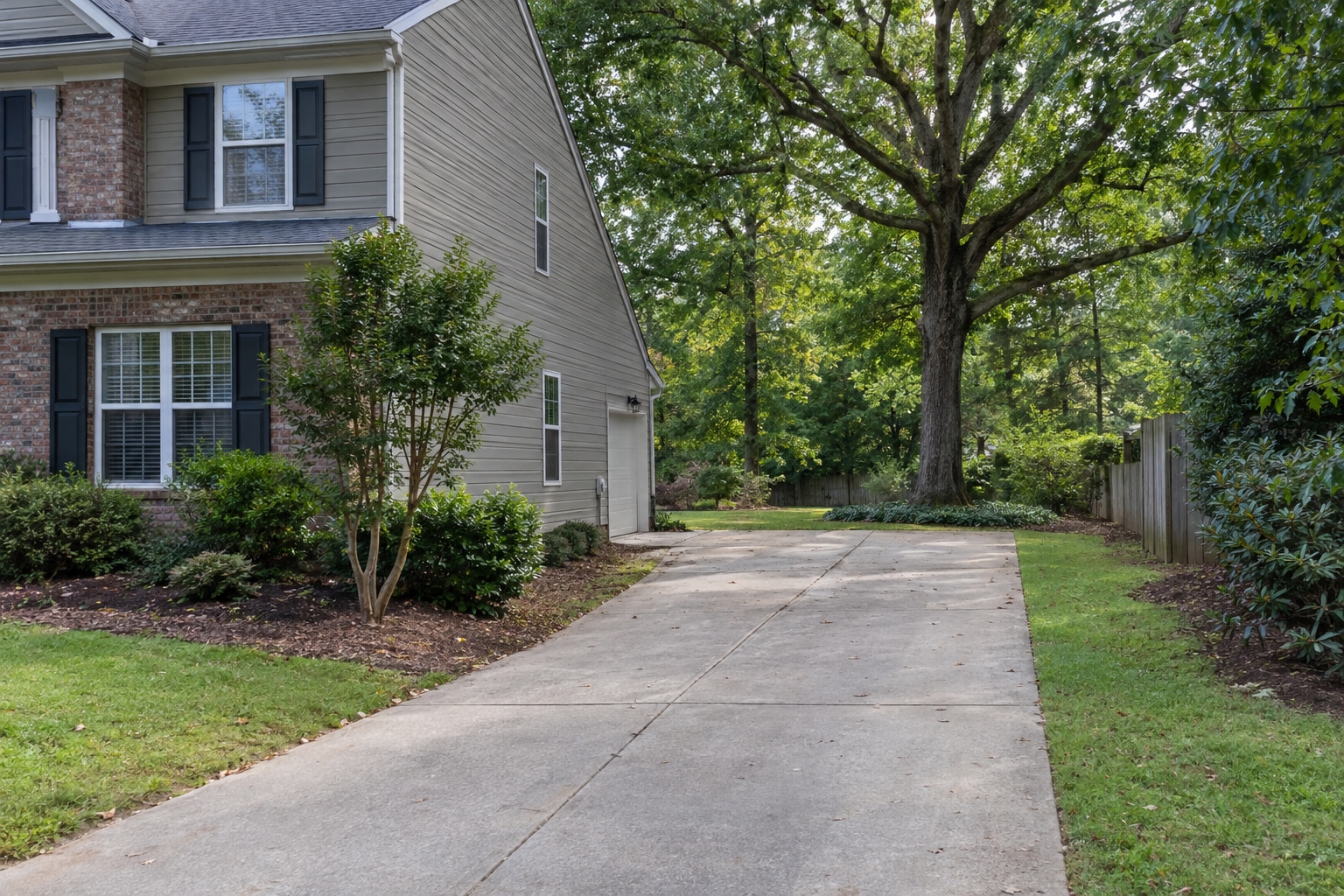
What decides whether crane-assisted tree removal in Cary will work?
We think of your property as three spaces that have to connect: the way in, the spot where the crane works and the place where the wood gets set down. The plan only works if all three do. The truck might reach the tree from the driveway, for example, but we'd still need a separate clear area to land and handle the sections.
When we visit, we look at the tree's size and condition, what's built around it and where the equipment could go. Overhead wires, rooflines, neighboring trees and the tree's own branches can all limit how the boom moves. A route that looks open in a photo may have a sharp turn, a steep slope or a weak driveway edge that changes the plan.
Your estimate should explain the plan in a way you can picture. Ask where the truck would stand, what area the crew would need cleared and where the sections would go. That tells you far more than the word “crane” on its own.
Does a 17-ton crane lift 17 tons anywhere?
No. What a crane can lift changes with how it's set up and how far the load is from the truck. The boom position, the working radius and the manufacturer's load chart all matter, and so does the weight of the lifting gear itself. A 17-ton rating doesn't mean the truck can pick up 17 tons from across the yard.
Trees add another wrinkle: we have to estimate a section's weight before it's cut free. Species, size, moisture and branch structure all affect that estimate. Decay can make it harder to choose where to attach and can change how a section behaves as it comes free. So part of planning each lift is choosing pieces we can handle.
Trees of Carolina has operated its own crane for over 20 years. That experience helps us size up a job, but it doesn't override the equipment's limits or the conditions at your address. We don't judge a lift by the capacity label alone.
Fitting in the driveway isn't the same as having room to work
A boom truck may fit through an entrance and still not have room to work there. The outriggers extend out past the truck to steady it, so the spot needs room for them, firm support underneath and clearance around the equipment.
Our Terex is a white boom truck with red outriggers. Having the crane on a truck helps when the way in is a driveway, but it still needs room and solid ground to set up. The truck's own footprint is only part of the space the job needs.
We may suggest mats to help support the equipment and protect the areas we drive or work on. Mats spread the weight, but they can't turn poor ground into solid support, and they don't guarantee a lawn without marks. The soil, the slope, recent rain and what's under the surface all still matter.
What should you tell us about the ground?
Tell us about any underground utilities, septic parts, drainage, irrigation or recent digging you know of near where the equipment might go. Mention driveway problems or spots where vehicles have sunk before. What's hidden under a tidy lawn can matter more than how it looks.
What you tell us helps us know what to check; it doesn't replace the checking. Don't dig, probe for utilities or move heavy materials to get ready for an estimate. Just show us the areas you know about and tell us about any recent changes to the property.
Also point out any trees you're keeping whose roots could be in the way. We plan around those roots from the start. The shortest route for the truck may be a poor choice if it means driving again and again over the soil around a tree you want to keep.
Does the crane need to drive right up to the tree?
Not always. The truck can sometimes work from a distance, which is one reason a crane helps around houses and other obstacles. Whether that works depends on the reach and the weight of each lift. Working from farther away may mean smaller pieces, or it may put the tree out of range altogether.
So for a tree in a fenced backyard, we need to see the site, not just hear how wide the gate is. We look at the distance from where the truck could set up, the height of anything in between and the path each section would take. We also plan where the crew will be, both up at the tree and handling wood on the ground.
If the crane isn't the right fit, we'll look at another way to take the tree down. That could mean lowering pieces with ropes, cutting in a different order or setting up the equipment differently. We pick the method that fits your tree and yard, rather than forcing your property to fit the machine.
How much room does the rest of the job need?
The lift is only one part of the work. Once sections are on the ground, they have to be cut up and moved out. Trucks and crew need room to work, and anyone who isn't part of the job needs to stay out of the work area.
Talk with us about parking, gates, outdoor furniture and getting in and out of your house before the work starts. Ask whether any part of the driveway or yard will be off limits and how the crew will let you know when it's clear. Don't assume it's fine to walk under a lift just because the truck is several yards away.
Your written estimate should also make clear whether it covers just the tree or the stump and the state of the yard afterward too. Ask what happens to the wood and debris and how your yard will be protected. Those are good questions for any removal, crane or not.
What to send us about your Cary property
Send us your address, a description of the tree and a few photos taken from a safe spot. Wide shots of the tree, the driveway and nearby buildings usually help more than one close-up of the trunk. Tell us why you want the tree gone and whether anything has changed lately.
Photos get the conversation started, but they can't tell us the lifting limits, how firm the ground is or what the wood looks like inside. Don't climb the tree, stand under damaged branches or go anywhere risky for a better shot. Seeing the property in person is what lets us turn the access question into a real removal plan.
Questions we hear
Can a crane work on a small residential property?
It can, if there's a good spot to set up, the tree is within reach and there's room to handle the sections. Yard size alone doesn't tell you whether all three are there.
Do mats prevent all lawn damage?
Mats help spread the equipment's weight and protect the work area. The ground and the job itself still matter, so they can't guarantee your lawn won't be marked.
Can you decide from my tree photos?
Photos help us understand where the tree is and what you want to know. We still need to see the access, the ground and the tree itself in person.
To find out whether crane-assisted tree removal will work on your Cary property, contact Trees of Carolina and tell us where the tree stands and what's around it.