
What affects the cost of tree removal in Raleigh?
See what affects the cost of tree removal in Raleigh, from the tree's condition and access to equipment, cleanup and stump grinding, so you can compare what each estimate includes.
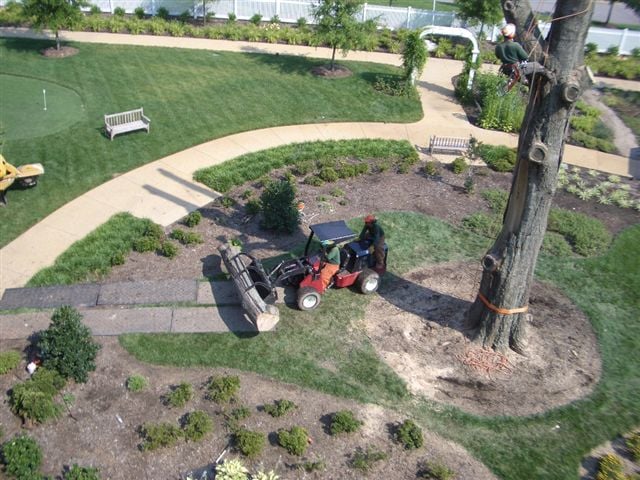
The cost of tree removal in Raleigh depends on how the tree can be taken down and how the material can leave your property. Size matters, but so do the tree's condition, what sits underneath it, equipment access and the cleanup you want. Two trees of similar height can need very different amounts of work.
When you ask us about a removal, the best place to start is the whole job: the tree, the space around it and what you want left when we're finished. Here's what goes into it, and what to ask when you're comparing estimates.
Tree removal in Raleigh starts with the space around the tree
A tree in an open area has different removal options from one growing between a house, a fence and a neighbor's garage. With room available, sections may be lowered into a clear work area. In a confined yard, each piece may need to be controlled and moved through a much smaller space.
Look at what's below the branches as well as what's beside the trunk. Roofs, decks, garden beds, sheds and parked vehicles all affect the plan. A large limb extending over a roof may require more handling than a similar limb over open ground. The question is where each piece can go without relying on luck.
Property lines matter here, too. A route that looks easy on a photograph may cross a neighbor's yard. Tell us which access belongs to you and whether another owner has agreed to its use. We shouldn't build a removal plan around space we can't use.
Height, trunk size and crown shape change the work
Height is only one way to describe a tree. Trunk diameter helps show how much wood needs to be cut and moved. A broad crown can mean substantial limb work before the trunk comes down, while a narrow crown may have a different balance of branches and wood.
The direction of growth also matters. A tree that leans over a building or has long limbs reaching across a fence may need a different sequence from an upright tree with clearance on all sides. We think about how big each piece can be, where it can be lowered and how to avoid putting extra strain on what's left of the tree.
You don't need to measure a tall tree yourself. Photos showing the entire tree and nearby buildings are a better first step than guessing its height or climbing for a closer look.
A damaged tree can limit how it comes down
Dead, damaged or decayed wood changes how we can work a tree. A sound tree can take approaches that a weakened one can't. With a hollow trunk, a broken crown or a damaged branch attachment, we have to account for it before deciding where people and equipment should go.
What you can see is useful, but it doesn't tell the whole story. A cavity doesn't automatically mean the entire trunk has failed, and a leafy crown doesn't prove the trunk and roots are sound. How we take a tree down should depend on a look at the tree itself.
Tell us about changes you've noticed: a recent lean, a hanging limb, soil lifting near the base or damage after a storm. View the tree from a safe distance. Don't stand beneath a broken branch to get a photograph, and don't disturb material resting on a roof or another tree.
Access decides how equipment gets in and wood gets out
Getting the wood from the tree to the truck can be a big part of the job. A tree beside an accessible driveway is different from one behind a house with a narrow gate and a long route to the street.
Gate width, steps, slopes and tight turns can limit equipment. Septic areas, irrigation, buried utilities and delicate paving need to be part of the discussion. A driveway that accommodates a car isn't automatically suitable for every truck or equipment setup.
Ground conditions count as well. Soft soil can limit where equipment travels or stands. The plan may need a different route, ground protection or another way to move the wood. That's why it's worth talking about access before you compare quotes, not leaving it to sort out once work starts.
When it makes sense to bring in a crane
A crane may be worth considering when large sections need to be lifted out of a confined area. It changes how wood moves around a home, but the truck needs a suitable spot to set up and work.
Reach, the weight of each section and the setup position all matter. The capacity printed on a crane doesn't mean it can lift that weight at every distance. The real lifting plan comes down to the equipment's limits and the conditions on your property.
Trees of Carolina has operated its own crane for over 20 years. Our 17-ton Terex boom truck is one of the tools we bring to difficult removals. You can read more about our crane service for large and hard-to-reach trees, then ask whether it fits your property.
A crane doesn't automatically make every removal cheaper or more expensive. Look at the whole plan, including setup and how the wood gets moved, not just the line for the equipment.
Cleanup and the stump are separate decisions
“Remove the tree” can mean different things unless the estimate spells it out. Does it include cutting and hauling the trunk, chipping branches and removing the debris? Are you keeping any wood? Will the stump remain?
If you want wood left behind, discuss where it should go and how it will be cut. Large trunk sections are heavy; keeping them can leave you with more handling than you expect. Likewise, a pile of chips can be useful for some plans, but it takes space and isn't the same as a finished lawn.
Stump grinding is another part of the conversation. The stump's size, its location and access for the grinder affect that work. Ask what will happen to the grindings and what surface will remain. Grinding a stump doesn't automatically include hauling every chip, adding topsoil or reseeding.
Our tree removal and stump grinding page covers both services. When you get an estimate, make sure the written scope separates what you want done now from what you might handle later.
Compare tree removal in Raleigh by what's actually included
A lower total only helps if you know what it covers. Before choosing an estimate, ask each company to explain these points:
- Which tree or trees are included, and how are they identified?
- What removal method and equipment does the plan call for?
- Which access route and setup area will be used?
- What wood, branches and chips will be hauled away or left?
- Is stump grinding included, and what happens afterward?
- What assumptions could change the scope once the tree is assessed?
Ask about credentials and insurance directly, and request the relevant documentation from the company you're considering. When the work is spelled out clearly, it's easier to compare proposals and spot the differences before you commit.
What to send us before we talk about your tree
Send your Raleigh address, a photo of the full tree and views showing the house, driveway, gate and other nearby structures. Tell us what concerns you and whether you're thinking about keeping the stump or any wood. Mention access restrictions and known underground features.
Photos are a good start, but they may not show the tree's condition or how much room the equipment needs. From there, we'll talk through your property and the work you want, so we're discussing the whole removal instead of putting a number on height alone.